
Uncategorized, Article, Child Nutrition

How to make a diet chart for a 3-6 year old child?

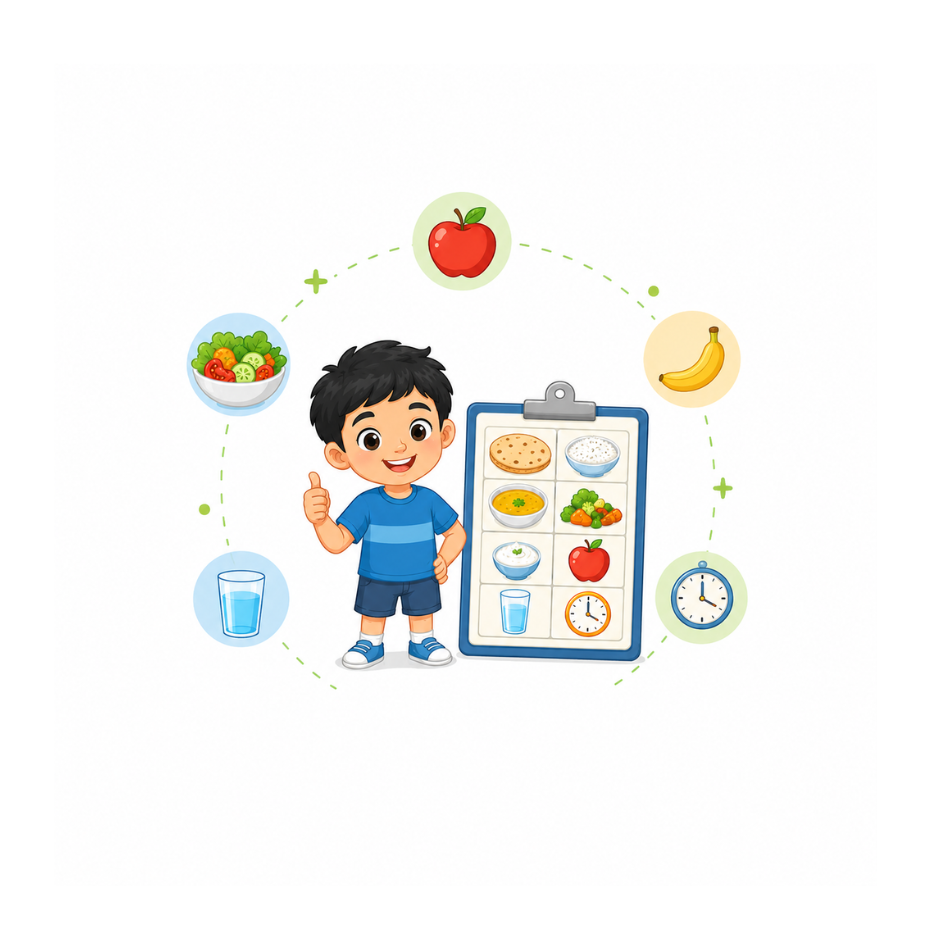
A food guide by a dietitian Anuradha Children between 3 and 6 years of age undergo an important phase of development and development. Their brains are growing rapidly, physical activity increases, and therefore requires proper nutrition. As a parent, providing the right balance of foods rich in vitamins, minerals and energy to your child is essential for their overall health and immunity. Creating a well-employed diet chart is not complicated for a 3-6 year old child. As a dietist Anuradha, we believe in keeping it simple, nutritious and tasty – using the ingredients available easily in every kitchen. 3-6 year nutritional requirements  What should be included in your child’s daily diet here:. Carbohydrates: Energy Booster (Roti, Millets, Sabudana, Bhutta (Corn), Makhana, Rice, Poha, Idli, Dosa, Uttapam, Ragi Mudde) . Protein: muscle and brain development (lentils & Pulses, curd and other dairy products, Nuts) . Fat: Essential for brain development (ghee, nuts & seeds, healthy oils) . Calcium: Strong bones and teeth (milk, ragi, curd, nuts & seeds, green leafy vegetables, water chestnut) . Iron: Blood and brain health support (green leafy vegetables, raisins, dried apricots, date, chickpeas & other legumes, nuts & seeds) . Fiber and liquids: Keeps digestion strong (fruit, whole grains, sprouts, salads, vegetables, tender coconut water, lemon juice, clear soup, thin lassi, water)  Ideal Meal Schedule for Children (3–6 Years) Creating structure helps children eat better. Here’s a simple routine: Meal Time Suggested Meal Early Morning (7:00 AM) Warm milk with a few soaked almonds or raisins Breakfast (8:30 AM) Vegetable upma / besan chilla / aloo paratha + curd Mid-Morning Snack (10:30 AM) Seasonal fruit (banana, apple, chikoo) Lunch (12:30 PM) Rice + dal + ghee + sabzi + small salad or curd Evening Snack (4:30 PM) Vegetable poha / dhokla / alu-chana chaat Dinner (7:00 PM) 1-2 phulka + paneer or dal + veggies Food tips for picky eaters Healthy Homemade Snack Ideas Foods to Avoid These foods are low in nutrition and can affect digestion, energy, immunity, Brain development, growth and development over time. Final Thoughts from Dietitian Anuradha The 3–6 age range is a golden window to build healthy eating habits that last a lifetime. A food offers a treasure trove of balanced meals using dal, roti, rice, vegetables, dairy, and fresh fruits. With the right guidance and simple planning, you can give your child everything they need—nutritionally and emotionally—on their plate. Want a personalized diet chart for your child based on their taste preferences, growth, or medical needs? Book a consultation today with Dietitian Anuradha and give your child the gift of lifelong health.

How to make a diet chart for a 3-6 year old child? Read Post »
Article, Balanced Diet & Specific Nutrients

Work-life balance: 5 lifestyle tips that help

There is a reason why the current work culture in India lacks a work-life balance. Two generations ago, our nation was under colonial rule. By the time it ended, we had to confront the world wars. The economic repercussions were undeniably significant. We endured malnourishment, famines, and numerous economic challenges during and even after the colonial period. There was terrorism, communal riots, and even educated individuals struggled to find employment. Naturally, those parents instilled in their children the belief that education and career are paramount in life. They taught that one should prioritize work over eating, sleeping, and playing to earn a living. Consequently, the current generation has been raised with this mindset. As a result, we do not appreciate the importance of work-life balance. This is why foreigners persuaded us to work night shifts for them, allowing them to maintain their work-life balance. We are so CONSIDERATE of the time difference that we fail to recognize how this arrangement is detrimental to our health. Here are 5 tips that can assist us: 1. Be selfish – We must begin to prioritize our health. We rank first in heart diseases, second in the least amount of sleep, and are runners-up in depression, diabetic capital of the world. These are not achievements to take pride in. At dietitiananuradha.com, we encounter patients who have already suffered damage to multiple organs yet remain more concerned about their jobs. How can we treat someone with a lifestyle disease without altering their lifestyle? Their work does not allow them time to eat, sleep, hydrate, or even relieve themselves. Sometimes, it is not solely the management’s fault; employees willingly engage in this behavior to prove their worth. However, they are not demonstrating anything other than the prevalence of lifestyle diseases and organ damage resulting from an inadequate work-life balance. 2. Relax – It is advisable to engage in a hobby that does not involve OTT platforms or video games. After work hours, it is essential to disconnect from work-related thoughts. Envision yourself in the 1990s upon returning home from your job. Share a meal with your family, discussing the day’s experiences. Assist your spouse in tidying up the kitchen. Take a leisurely stroll after dinner. Spend quality time with your children playing games such as ludo, carrom, or chess. Enjoy romantic moments with your spouse. Listen to music, view old photographs from your childhood, paint, sing, read (preferably on paper, as Kindle was not available in the 1990s), play the organ, or engage in any activity that brings you joy. 3. Sleep and Eat on Time – Our bodily systems operate involuntarily, meaning we do not have direct control over them. However, our brain manages these functions automatically. It has been established that the brain optimizes bodily functions when we adhere to a lifestyle aligned with our circadian rhythm (the body’s internal clock). Even if we attempt to instruct our brain to adjust to a new lifestyle, it is unlikely to comply. Therefore, it is crucial to maintain a regular schedule for eating and sleeping. Otherwise, we risk becoming leaders in chronic lifestyle diseases. Please refrain from claiming, “Nothing happens to me.” Statistics do not lie. We have encountered cases of 19-year-old cardiac patients, 16-year-old individuals with type 2 diabetes, and 6-year-olds with grade three fatty liver, all of which stem from lifestyle choices. Moreover, if we neglect to eat properly when we require energy during work hours, we often resort to stress eating, which tends to be high in calories, sugar, salt, and fats. 4. Gratitude – It is important to express gratitude for what we have on our plates. Fold your hands, thank God, and enjoy your meal, whether it consists of green vegetables, dal, roti, rice, idli, or any other family dish. Natural foods are not tailored to our preferences like processed foods are; we must adapt to their flavors. Vegetables, fruits, and dals that we may not enjoy for their taste are beneficial for our health. Conversely, processed foods, which are designed to cater to our tastes, can be harmful. Visiting places such as CINI (Child in Need Institute) can enhance our appreciation for what we have. It may also inspire us to become better individuals who are more generous. 5. Meditate and exercise – Begin your day with a positive mindset. As per our earlier advice, you have already risen early. Now you have the opportunity to engage in exercise, take a bath, pray, meditate, prepare breakfast, and eat. With such a start, your performance at work is bound to soar. As the well-known saying we often repeat goes, “It is simple to be happy, but it is difficult to be simple.” In a similar vein, “It is simple to be healthy, but it is difficult to be simple.” Furthermore, social media has led us to develop addictive behaviors and has significantly disrupted our lifestyles. I came across a fascinating post that stated: when something is free, you are not the customer; you are the product. Consider this: you become addicted to processed foods, streaming services, and social media. As a result, you may fall ill and find it challenging to alter your lifestyle, becoming reliant on medication and healthcare facilities. Numerous industries thrive on your dependency. We have been bestowed with a precious gift, our brain, which can be likened to Felix Felicis. Utilize it wisely.

Work-life balance: 5 lifestyle tips that help Read Post »

Scroll to Top

Quick Enquire