
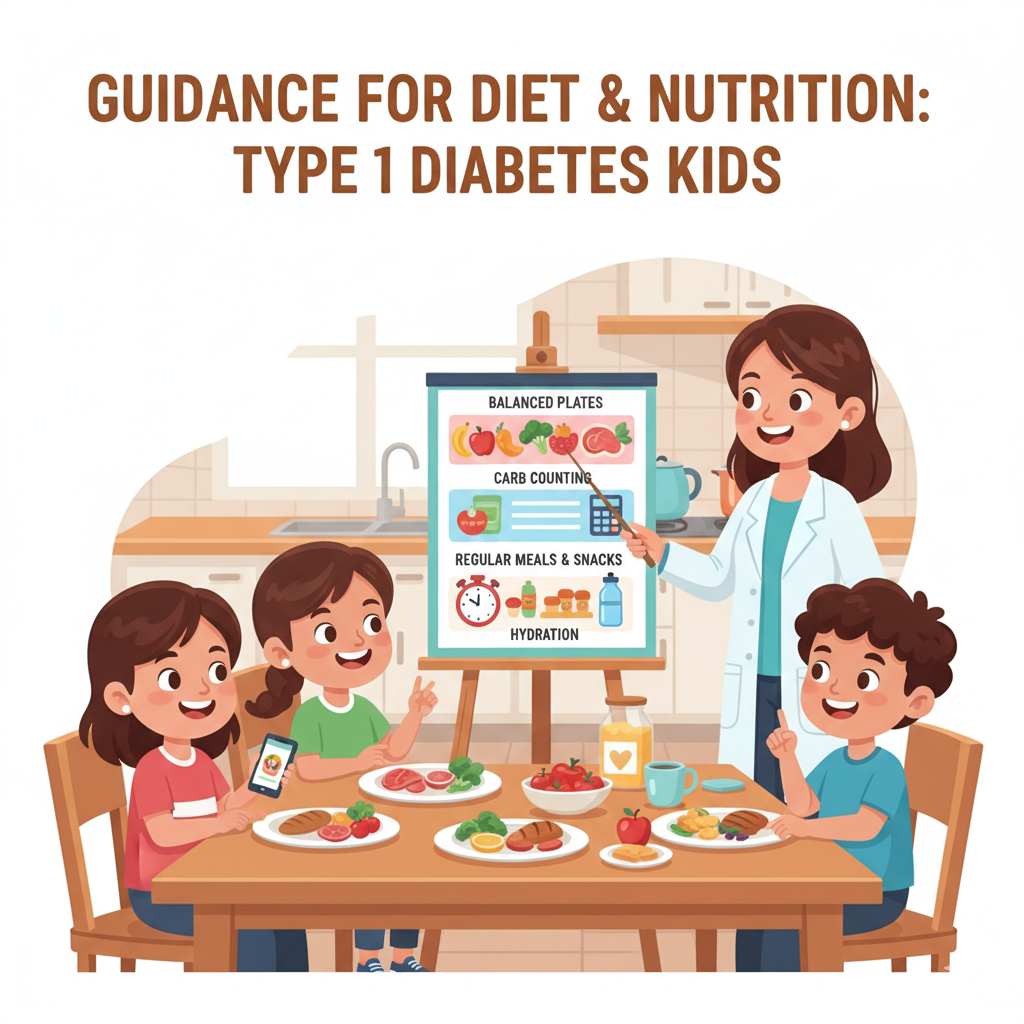
Type 1 Diabetes
Child Nutrition, Diabetes, Thyroid, & Other Hormonal Issues

Type 1 Diabetes Diet for Kids: Indian Meal Plans for Stable Blood Sugar (2026 Guide)

Introduction Managing type 1 diabetes in kids doesn’t mean boring meals—think dal-chawal with a smart twist! As a Kolkata-based dietitian, I’ve helped families stabilise blood sugar using everyday Indian foods. We have to understand Type 1 diabetes is totally insulin-dependent. Meaning the child’s pancreas aren’t able to make insulin at all. What does Type 1 diabetes mean? When our body works fine our brain is in charge of Insulin. When we need energy, our cells inform the brain. The brain signals food sources or storage sources to send glucose (sugar) and pancreas for insulin. Actually, insulin is like a key. When energy reaches the door of the cell, the insulin key opens the cell door for it to let the glucose molecule enter the cell. When a child has type 1 diabetes, the pancreas does not make and send insulin to the cells. So, the lock on the cell door doesn’t open, and glucose doesn’t enter the cell to provide energy. The cell doesn’t know a glucose molecule is waiting at the door, and insulin is absent. It keeps sending signals to the brain, not having received glucose. Now the brain also doesn’t come to know the absence of insulin. So it keeps sending glucose from various sources first, then storage, and when that ends, it breaks down protein stores and converts them into glucose and keeps sending glucose. Once protein sources are exhausted, the brain starts using fat stores to convert into glucose. When the fats keep converting into glucose in this uncontrolled fashion, it leads to ketoacidosis, the classic symptom of type 1 diabetes. Since the absence of insulin was the actual problem in the first place, once it is provided through injection (or nowadays inhalers have also come, please talk to your endocrinologist regarding use), the usage of energy starts functioning systematically. Why is Type 1 diabetes diet important? In the above explaination it is clear that now the control of insulin is not with the child’s brain anymore since the pancreas is not making it. Now the insulin is controlled by the endocrinologist’s brain, and they plan the doses according to height, weight, and age of the child. Although very intelligent, but the brain is now external to the child’s body. In a person whose pancreas functions normally, every time a person eats, the insulin production can manage the energy utilisation. Excess energy is stored in the liver and adipose tissue; everything works in a proper cycle. In a child with type 1 diabetes, this cycle is broken, hence the diet has to be planned according to the insulin doses designed by the medical practitioner. If we believe insulin is being given so the child can eat the way it pleases, that can be very detrimental to health. Frequent fluctuations, and as explained, ketoacidosis can occur. Is Type 1 Diabetes Scary? Unmanaged type 1 diabetes is scary and can be life-threatening. Well-Managed type 1 diabetes with diet, medical monitoring, and proper lifestyle surely gives the child a normal childhood and a healthy, long life. At OPD, we get questions like, ” Will my daughter live through, can she marry, have children, & lead a normal life?” I know these questions are coming from the bias of Indian society, but still, the answer is yes, Both Sons and daughters can marry and live a healthy married life with type 1 diabetes. The condition is regular medical monitoring, diet management and a good lifestyle. In today’s world, when chronic diseases are on the rise, these are essential for any person for a healthy, long life, otherwise even without Type 1 diabetes, people do suffer. What is Type 1 diabetic diet? The most important thing to understand is that every food coming from plant or dairy sources has carbohydrates. Some have more, some have less. Also, carbohydrates directly increase sugar levels. This is because, when brain signals sending of glucose, readily available carbohydrates are the first & fastest choice for the body to release glucose, as long as they are avilable body doesn’t use any other source. Earlier, a concept was created around this information, glycemic index values were given to the foods according to the ability to increase glucose in our bloodstream. People were advised to avoid high Glycemic index foods, restrict moderate ones and include low ones. But this system still didn’t regulate blood sugar levels. Why so? Even if we take low glycemic index foods only, but take too many servings together, the total of carbohydrate content in the meal increases sugar levels. Carbohydrate Counting As discussed, all dairy and plant source foods have carbohydrates, so we must count the carbohydrates in each meal. Each food group has a different amount of carbohydrate on an average basis. E.g. dairy has 12 gm carbohydrate per serving, cereal has 21-22 gm, pulses and legumes have 15 gm, fruits have varied and so on. A qualified dietitian can help you understand serving sizes for your child and carbohydrate counting so that you can efficiently balance glucose and insulin doses. Diet & lifestyle for Type 1 diabetes Apart from carbohydrate counting, we must ensure few more things: Final Word One can manage type 1 diabetes and lead a long, healthy life. Take help. It is a medical condition. Please do not go after quackery; so-n-so will reverse Type 1 diabetes. No, it won’t. One organ is not functioning; no quackery can make it work. Connect with me for detailed and personalised Diet plan and counseling. We will together monitor the child and learn the concepts for few months, then you will be tension free for life.

Type 1 Diabetes Diet for Kids: Indian Meal Plans for Stable Blood Sugar (2026 Guide) Read Post »

Control of Your Blood Sugar
Article, Diabetes, Thyroid, & Other Hormonal Issues

How to Take Control of Your Blood Sugar Naturally

Blood sugar control doesn’t have to be difficult. Simple, sustainable lifestyle choices are some of the most effective adjustments you can make. A few minor changes to control blood sugar can have a significant effect on your general health, regardless of whether you have been recently diagnosed with pre-diabetes or are attempting to enhance your metabolic health. Let’s examine how to control blood sugar and some essential strategies for sustaining good health naturally and successfully, beginning right now. 1. Never Skip Meals and Snacks One of the most frequent errors people make is skipping meals in the hopes of controlling their blood sugar levels or losing weight. Missing meals can result in a sharp decrease in blood sugar levels, which is followed by a rise when you eat again, particularly if the meal is high in carbohydrates. Aim for consistent, well-balanced meals with 3 large meals (portionwise) and at least 3 small snacks in between; to keep blood sugar and energy levels steady. Protein, healthy fats, & fiber rich foods or complex carbohydrates work together to keep your blood sugar levels stable and your body fed. 2. Go for a Post-Meal Walk Walking for 15 to 20 minutes after meals is the habit I advise every client with blood sugar issues to adopt. This easy exercise reduces post-meal sugar rises by improving how well your body uses the glucose from food. Even a short, brisk stroll around your house or neighborhood can have a significant positive impact on your insulin sensitivity and digestion. See how much better you feel after trying it after lunch or dinner. 3. Stay Hydrated Throughout the Day Because the body creates more concentrated glucose in the bloodstream when dehydrated, blood sugar levels may rise. Aim for 8 to 10 glasses of water a day, or more if you live in a hot area or are an active person. Keep taking small sips throughout the day, gulping down altogether maybe challenging.  Steer clear of sugary beverages such as energy drinks, juices, and sodas. An alternative that is both refreshing and blood sugar-friendly is water that has been flavored with lemon, cucumber, or mint. 4. Choose Fiber-Rich foods and understand Carbohydrate counting with qualified dietitians Just as important as when you eat is what you consume. Fiber-rich foods aid in reducing the rate at which blood sugar is absorbed, avoiding sharp surges. Increase your intake of vegetables, legumes, nuts, sprouts, and whole grains (millets, dalia, multigrain atta for roti). These foods promote gut health, to control blood sugar, and prolong feelings of fullness. Limit refined carbohydrates, highly processed foods, and added sugars as much as you can. Even if we take low glycemic index foods, we might still see a spike in our sugar levels. It happens because maybe we are taking too much of low glycemic index foods at one go, which makes total carbohydrate counting high. Thus, it is important that we not only understand what to eat and what not to eat, but also portions that can be taken from each food group in all meals and snacks. 5. Prioritize Stress Management Although stress is sometimes disregarded in diabetes management, it has a significant impact on blood sugar regulation. The “stress hormone” cortisol is released by your body when you’re under stress, and it might raise your blood sugar levels. Daily routines that reduce cortisol and enhance mental and physical well-being include deep breathing, yoga, guided meditation, and even journaling. Maintaining your mental health is equally as vital as maintaining your physical health. Small Steps, Big Results Keep in mind that you don’t have to make all of these adjustments at once. Over time, even one new habit, like drinking more water or going for a walk after meals, can result in big gains. Blood sugar control is a process rather than a race. Consistency, mindfulness, and paying attention to your body are the most important factors. Additionally, engaging with a competent dietitian can make the process more individualized and easier if you need support along the way. Need Help with a Personalized Plan? I can help if you want to control blood sugar levels or sustainably manage your diabetes. I provide personalised food planning, one-on-one coaching, and lifestyle advice to assist your health journey. Connect now.

How to Take Control of Your Blood Sugar Naturally Read Post »

Article, Diabetes, Thyroid, & Other Hormonal Issues

How to Manage Diabetes: 5 Surprising Diet Tips You Haven’t Heard

India has the second-highest rate of diabetes in the world, but it’s not just about the statistics; it’s also about how we’re handling—or not handling—the disease. Many individuals overlook crucial treatment components, such as nutrition and lifestyle, even if medications are frequently viewed as the mainstay. The following article discusses important tips for managing diabetes. These are five unexpected but crucial dietary recommendations that the majority of diabetics are unaware of, but should be aware of. 1. Proportions, Not Carbs, Are the Enemy Despite what is commonly believed, diabetics are not prohibited from eating carbohydrates. They are, in fact, necessary, but only in the proper amounts. Risky blood sugar rises (hyperglycemia) or decreases (hypoglycemia) might result from a poorly balanced carbohydrate intake. The secret? See a clinical dietitian so they can customize your carbohydrate consumption for you. Managing carbohydrates well is the aim, not getting rid of them. The concept that works favorably is Carbohydrate counting. In this method, the amount of carbohydrate given in each meal is controlled. This has proved to be a much more efficient method of managing blood glucose levels, as compared to choosing low glycemic index foods.     2. Protein Protects Against Diabetes and Isn’t Just for Bodybuilders You lose more protein when you have diabetes because it puts your body in a catabolic condition. The majority of Indians currently eat less protein than is advised. If you have diabetes, you probably began with a deficit, which hastens the course of the illness. To promote tissue regeneration and metabolic balance, it is essential to include high-quality protein sources such as dairy foods, pulses and lentils, lean meats & eggs. 3. Time Is Just as Important as What You Eat Even if you are eating the healthiest meals possible, your blood sugar will still be elevated if the timing is incorrect. Long intervals between meals or skipping meals can cause your blood sugar levels to become unstable. Rather, strive for regular, little meals that are evenly spaced out throughout the day. Maintain a schedule and refrain from binge eating; for diabetics, fasting and feasting are serious warning signs. 4. Watch Out Online: Not All Dietary Advice Is Equal Online, “diabetic diet” advice abounds, but a lot of it might be deceptive. The improper advice, such as extreme protein deficits or unbalanced nutrition, can do more harm than good, and this is true of both fad diets and “certified” influencers. Always seek advice from a licensed clinical dietitian, not simply someone who completed a weekend course, who has a Bachelor’s or Master’s degree in nutrition. 5. Prevention is Power—Early Damage Is Invisible When you are diagnosed, your pancreas may still be functioning at 60 to 95 percent, but it may quickly drop if you don’t make the right dietary and lifestyle choices. Unfortunately, until the damage is severe, it is not immediately apparent. Therefore, it’s imperative to respond quickly. Nutrition and exercise are your best tools to stop the progression and prevent complications; medication won’t keep you safe. Final Thoughts Ignoring diabetes control results in long-term misery rather than death, despite the brave statement that “we have to die anyway, might as well enjoy life.” Your quality of life will be determined by the decisions you make now, even though modern science can prolong your life for decades. Are you prepared to take charge of your health? Get professional advice from reputable dietitians that is suited to your needs. For individualized plans that will help you thrive rather than merely survive, get in touch with dietitian Anuradha.

How to Manage Diabetes: 5 Surprising Diet Tips You Haven’t Heard Read Post »

Scroll to Top

Quick Enquire